Do Elections Impact the Housing Market?

Do Elections Impact the Housing Market?
The 2024 Presidential election is just months away. As someone who’s thinking about potentially buying or selling a home, you’re probably curious about what effect, if any, elections have on the housing market.
It’s a great question because buying or selling a home is a major decision, and it’s natural to wonder how such a major event might impact your plans.
Historically, Presidential elections have only had a small, temporary impact on the housing market. Here’s the latest on exactly what’s happened to home sales, prices, and mortgage rates throughout those time periods.
Home Sales
During the month of November, in years when the Presidential election takes place, there’s typically a slight slowdown in home sales. As Ali Wolf, Chief Economist at Zonda, explains:
“Usually, home sales are unchanged compared to a non-election year with the exception being November. In an election year, November is slower than normal.”
This is mostly because some people feel uncertain and hesitant about making big decisions during such a pivotal time. However, it’s important to know this slowdown is temporary. Historically, home sales bounce back in December and continue to rise the following year.
In fact, data from the Department of Housing and Urban Development (HUD) and the National Association of Realtors (NAR) shows after nine of the last 11 Presidential elections, home sales went up the next year (see graph below): 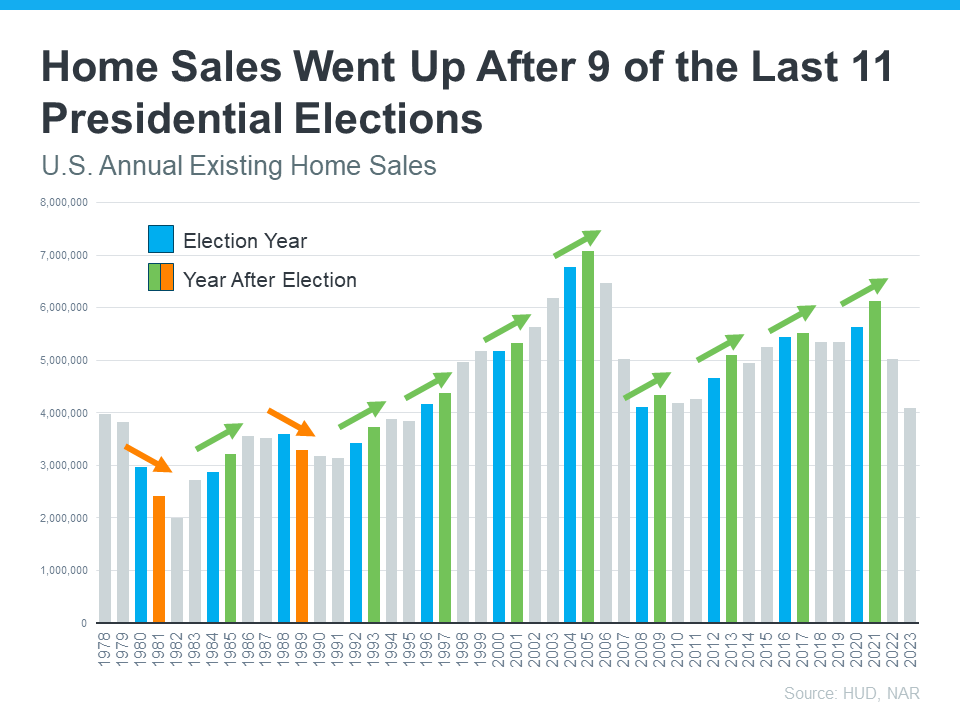
The graph shows annual home sales going back to 1978. Each year with a Presidential election is noted in blue. The year immediately after each election is green if existing home sales rose that year. The two orange bars represent the only years when home sales decreased after an election.
Home Prices
What about home prices? Do they drop during election years? Not typically. As residential appraiser and housing analyst Ryan Lundquist puts it:
“An election year doesn’t alter the price trend that is already happening in the market.”
Home prices are pretty resilient. They generally rise year-over-year, regardless of elections. The latest data from NAR shows after seven of the last eight Presidential elections, home prices increased the following year (see graph below): 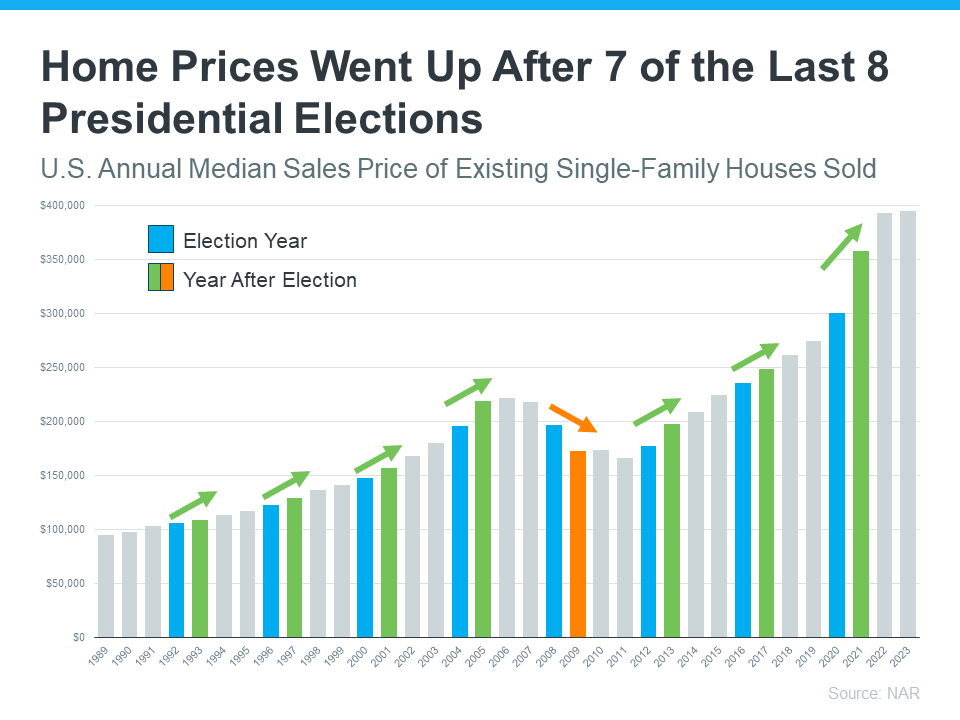
Just like the previous graph, this shows election years in blue. The only year when prices declined after an election is in orange. That was during the housing market crash, which was far from a typical year. Today’s market is different than it was back then.
All the green bars represent when prices rose the following year. So, if you're worried about your home losing value because of an election, you can rest easy knowing prices rise after most Presidential elections.
Mortgage Rates
Mortgage rates are important because they affect how much your monthly payment will be when you buy a home. Looking at the last 11 Presidential election years, data from Freddie Mac shows mortgage rates decreased from July to November in eight of them (see chart below): 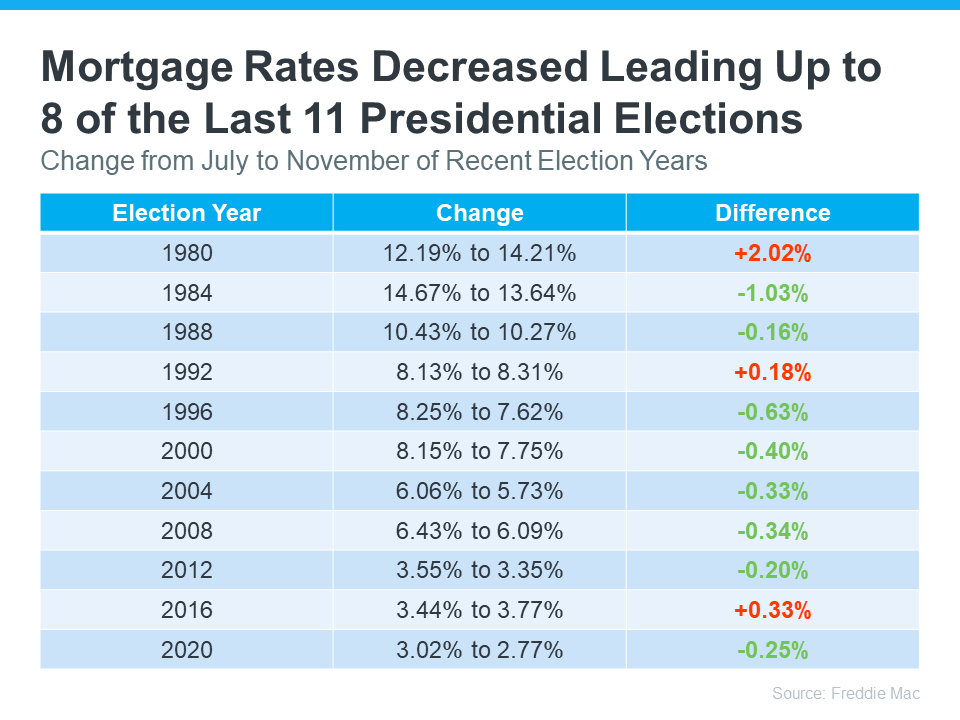
Most forecasts expect mortgage rates to ease slightly throughout the remainder of the year. If they’re right, this year will follow the trend of declining rates leading up to most previous elections. And if you’re looking to buy a home in the coming months, this could be good news, as lower rates could mean a lower monthly payment.
What This Means for You
So, what’s the big takeaway? While Presidential elections do have some impact on the housing market, the effects are usually small and temporary. As Lisa Sturtevant, Chief Economist at Bright MLS, says:
“Historically, the housing market doesn’t tend to look very different in presidential election years compared to other years.”
For most buyers and sellers, elections don’t have a major impact on their plans.
Bottom Line
While it’s natural to feel a bit uncertain during an election year, history shows the housing market remains strong and resilient. For help navigating the market, election year or not, let’s connect.
Categories
- All Blogs 504
- Buying A Home 74
- Community Neighborhood Guides 18
- DFW Lifestyle 49
- Eat, Drink, & Shop Local 18
- First Time Home Buyer Tips 167
- Homeownership Tips & Tricks 25
- Living in Arlington, TX 13
- Living in Burleson 14
- Living in Dallas Fort Worth Metroplex 83
- Living In Texas 22
- Mansfield, TX 20
- Midlothian, TX 19
- Mortgage Rates, Financing, and Affordability 42
- New Construction & Developments in DFW 15
- Real Estate Investing 38
- Real Estate News 74
- Rentals, Property Management, & Leasing 13
- Selling Your House 167
- Texas Relocation Guide 52
- Things To Do in DFW 12
Recent Posts







MY BLOGS
- Best Local Wineries Near Mansfield, Arlington & South DFW: 8 Spots Worth Visiting When you think about visiting Texas wineries, Fredericksburg and the Texas Hill Country probably come to mind. But did you know we have some wonderful wineries, vineyards, and tasting rooms right here in the Dallas–For
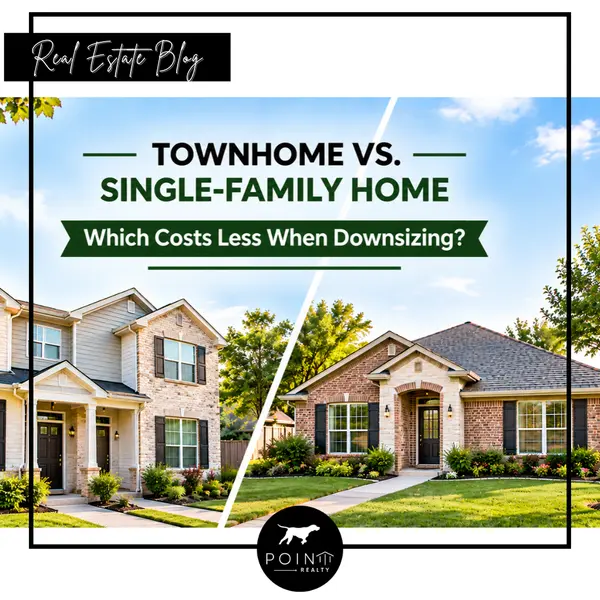
- Townhome vs. Small Single-Family Home: Which Downsizing Option Costs Less in Arlington & Mansfield? When people start talking to me about downsizing, one of the first things they mention is wanting less to maintain. They're tired of mowing a large backyard, cleaning rooms they rarely use, and spendi
- New Master-Planned Communities in DFW: 7 Neighborhoods to Explore in 2026 and Beyond If you've been thinking about buying a new construction home in Dallas–Fort Worth, you've probably noticed just how much development is happening across North Texas. But we're not just talking about new subdivisions
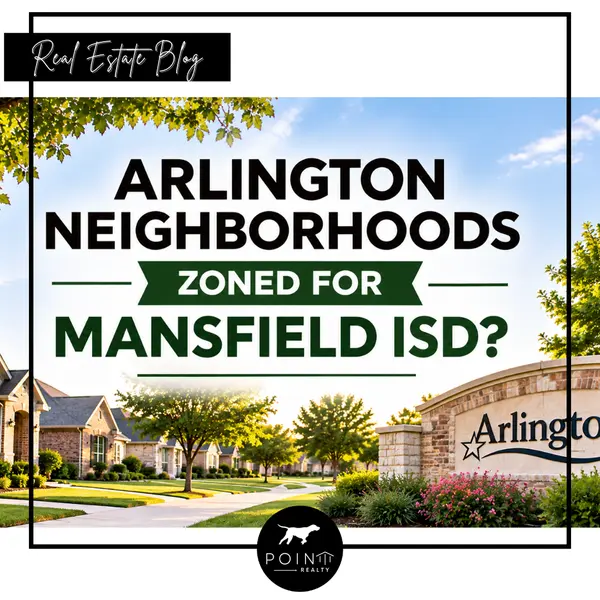
- Which Arlington Neighborhoods Are Zoned for Mansfield ISD? A South Arlington Homebuyer's Guide If you're searching for a home in Arlington, Texas, but you want your children to attend Mansfield ISD, you might be surprised by how many options you have. One of the things I hear from buyers relocating
MY BLOGS
- Best Local Wineries Near Mansfield, Arlington & South DFW: 8 Spots Worth Visiting
- Townhome vs. Small Single-Family Home: Which Downsizing Option Costs Less in Arlington & Mansfield?
- New Master-Planned Communities in DFW: 7 Neighborhoods to Explore in 2026 and Beyond

MY BLOGS
Local News, Events & More Emailed Daily!